0 €0.00
products in your basketto quote Checkout
Ooops no items were found.
Try something else.
Ok
Loading…

What Size Vacuum Pack Machine Does a Commercial Kitchen Need?

9 min
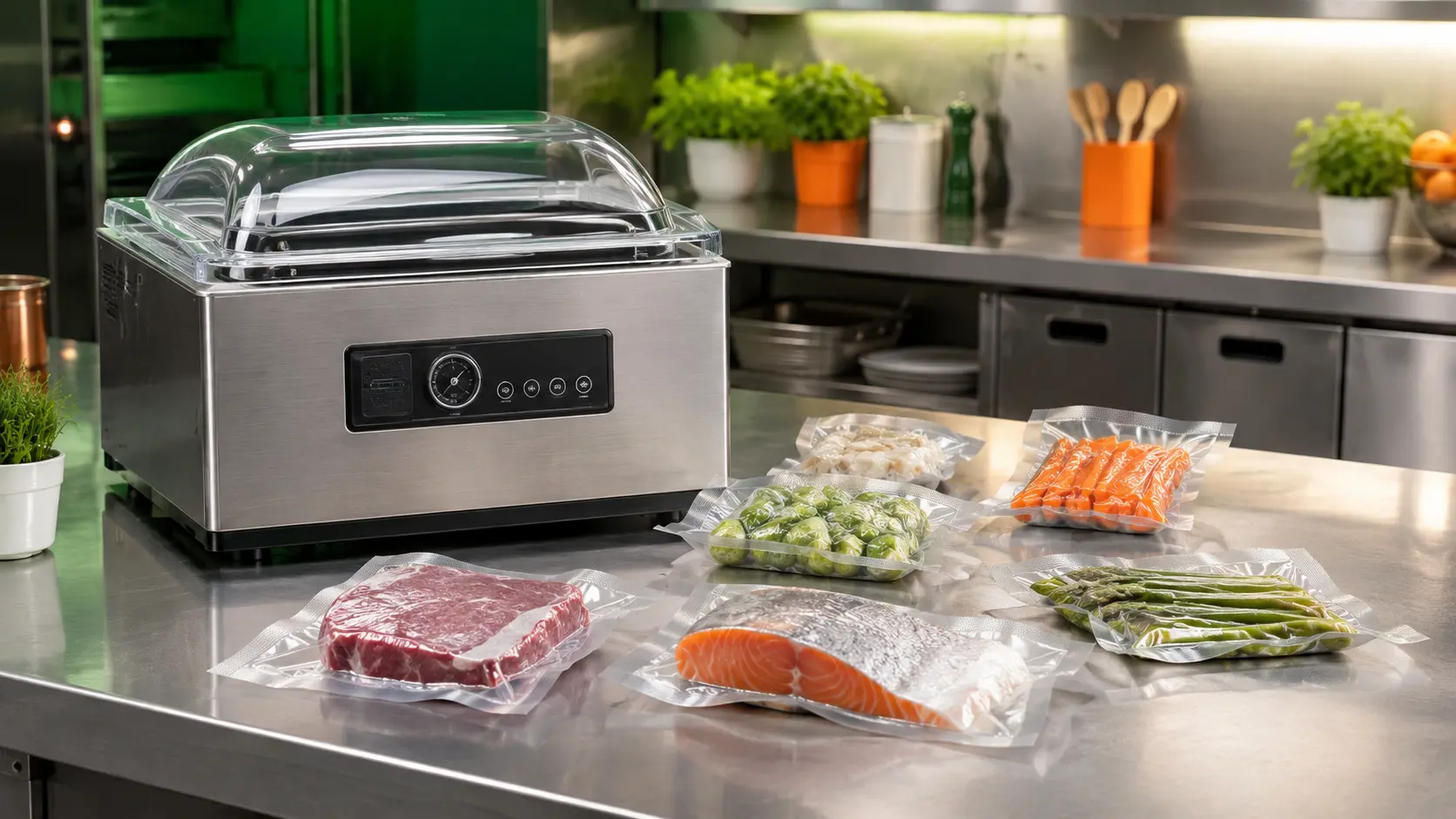
Commercial vacuum pack machine with sealed meat, fish and vegetables in a professional kitchen Commercial vacuum pack machine with sealed meat, fish and vegetables in a professional kitchen

What Size Vacuum Pack Machine Does a Commercial Kitchen Need?

A vacuum pack machine can become an extremely useful part of a commercial kitchen, but bigger is not automatically better. The right machine needs enough capacity for the food, bags and volume you regularly process without taking up more valuable preparation space than necessary.

For a small café or restaurant, that could mean a compact countertop model used for occasional portioning and food storage. A busy restaurant, hotel or production kitchen processing batches throughout the day may need a considerably larger and more capable commercial vacuum pack machine.

The easiest way to choose is to look at what you actually intend to pack. Bag width, portion size, chamber capacity, sealing bar length and the number of packs you need to process each day are all more useful than simply comparing the overall dimensions of different machines.

Key Takeaways

  • Start with the largest portion and bag you regularly expect to vacuum pack.
  • Check the sealing bar width because this limits the width of bag a machine can seal.
  • For chamber machines, make sure the complete pouch and food portion will fit comfortably inside the chamber.
  • Consider how many packs you expect to process during a typical preparation period.
  • Allow working space beside the machine for loading, sealing and organising finished packs.
  • Check that the vacuum bags you intend to use are compatible with the machine.
  • If you plan to prepare food for sous vide cooking, include this workload when choosing capacity.

What Does Vacuum Pack Machine Size Actually Mean?

Machine size can refer to several different measurements, which is why comparing two models by their external width alone can be misleading.

Sealing Bar Width

The sealing bar determines how wide a bag the machine can seal. This is one of the first specifications to check when comparing a commercial vacuum sealer.

If you regularly use wider pouches for larger cuts of meat, several portions or prepared ingredients, make sure the sealing width can accommodate them.

A 300mm vacuum sealer, for example, may suit many everyday portions, but the important question is whether 300mm is enough for the largest products your kitchen normally packs.

Chamber Dimensions

With a chamber vacuum pack machine, the pouch and food are placed inside the chamber during the vacuum cycle. Width is therefore not the only consideration. Chamber depth and usable height also matter.

A bag may technically fit the sealing bar but still be awkward to position if the food inside it is too bulky for the chamber.

Overall Machine Size

Finally, check the external dimensions. A machine can have exactly the capacity you need but still be unsuitable if it occupies most of a small preparation bench.

Remember that the machine also needs enough clear space around it to load bags, remove finished packs and clean the surrounding area.

How Much Food Will You Vacuum Pack Each Day?

The amount of food being processed is just as important as the dimensions of individual bags. A compact machine used 10 times during morning preparation has a very different job from one expected to seal batch after batch for several hours.

Light or Occasional Use

A smaller machine may be enough for a café, deli or restaurant that mainly uses vacuum packing for occasional ingredient storage, individual portions or small batches. Counter space may be the greater priority in this situation.

Regular Restaurant Use

A kitchen using commercial vac pack machines every day for meat, fish, vegetables, prepared sauces and portion control needs to think more carefully about workflow.

If one machine creates a queue of ingredients waiting to be sealed every morning, it is probably too small or too slow for the workload.

High Volume Preparation

Hotels, large restaurants, production kitchens and catering operations may process much larger batches. In these settings, cycle time and the ability to complete repeated packs efficiently become increasingly important.

The aim should be to choose capacity that matches a normal busy day rather than buying the biggest machine available. Extra capacity is useful when it prevents bottlenecks. It is less useful when it simply occupies additional floor or counter space.

What Size Bags and Portions Do You Need to Seal?

One of the simplest ways to choose a machine is to look at the bags already being used in your kitchen, or the portions you expect to pack.

Think about your largest normal item rather than your smallest. This might include:

  • Individual steaks and fish portions
  • Larger cuts of meat
  • Prepared vegetables
  • Cheese and charcuterie
  • Portioned ingredients
  • Sauces and prepared foods where the chosen machine and pouch are suitable
  • Food prepared ahead for sous vide cooking

Compare the dimensions of these portions with the sealing bar and, where relevant, the internal chamber dimensions.

The same principle applies when ordering vacuum pack bags. Buying a machine and only afterwards discovering that your preferred pouch size does not suit it is an avoidable problem.

Kitchens that like to cut bags to different lengths can also consider vacuum packing rolls, provided they are suitable for the particular machine being used.

A useful rule of thumb: size the machine around the largest portion you regularly pack, not the smallest portion it can handle.

Chamber or External Vacuum Pack Machine?

Machine type also affects how you think about size.

External Vacuum Packers

With an external vacuum packer, most of the pouch remains outside the machine. This can make the unit relatively compact and convenient for kitchens with limited worktop space.

Sealing width becomes an especially important specification because it determines the maximum width of pouch that can be positioned across the sealing area.

These machines can be useful where vacuum packing forms a relatively small part of the overall food preparation routine.

Chamber Vacuum Packers

Chamber models place the entire pouch within the machine. This makes the internal dimensions much more important because both the bag and the food need to sit properly inside.

A chamber machine can make sense where vacuum packing is carried out frequently or forms a significant part of the preparation process. The correct choice still depends on what is being packed and how often the machine is expected to run.

Neither design should automatically be considered the right answer for every commercial kitchen. Compare the workload, available space, bag type and products being packed before deciding.

Do You Need a Vacuum Pack Machine for Sous Vide?

Vacuum packing is often used when preparing portions for sous vide cooking. If this will be one of the machine's main jobs, include the volume of sous vide preparation in your calculations.

A restaurant preparing a handful of portions occasionally may have modest requirements. A kitchen using sous vide equipment throughout the menu could be sealing dozens of portions as part of regular mise en place.

Think about the largest sous vide portion, the number prepared together and the size of compatible bags required. It is much easier to build this capacity into the purchase now than discover later that vacuum packing has become the slowest stage of preparation.

Don't Forget Counter Space and Kitchen Workflow

A machine needs more space than the dimensions shown on the specification sheet.

Measure the Working Area, Not Just the Machine

  • Space for unsealed bags and prepared portions
  • A clear area for finished packs
  • Access to an appropriate electrical supply
  • Enough room for routine cleaning
  • Clear movement around the preparation bench

Consider where the vacuum packer sits within the wider preparation process. Ingredients may move from food storage and Gastronorm containers to the preparation area, into vacuum bags and then onwards to refrigeration, freezing or cooking.

Placing the machine logically within that sequence can make a greater difference to efficiency than simply choosing the smallest possible footprint.

The same approach is useful when planning other commercial cooking equipment. Measure the complete working area rather than only finding an empty rectangle of worktop where a machine will physically fit.

What Else Does a Vacuum Packing Setup Need?

The vacuum packer itself is only part of an organised food preparation setup.

Storage and Preparation

Suitable storage is still important before and after vacuum packing. commercial food containers are useful for prepared ingredients and mise en place, while stainless steel Gastronorm pans provide another practical option for organising food throughout preparation and service.

The wider preparation area may also include food preparation equipment for slicing, chopping and processing ingredients before portioning.

Refrigeration and Catering Equipment

Once packed, chilled ingredients still need suitable temperature controlled storage. Kitchens reviewing their overall setup may therefore want to consider their commercial refrigeration equipment at the same time.

For businesses upgrading more than one part of the kitchen, Hygiene.ie also provides a wider range of commercial catering equipment covering preparation, cooking, refrigeration and service.

Choosing the Right Size Vacuum Pack Machine

The best machine is one that comfortably handles your largest regular bag and your normal daily workload without becoming an obstacle in the kitchen.

Start by measuring your typical and largest portions. Check the corresponding bag widths, then compare them with sealing bar and chamber dimensions. From there, consider how many packs need to be completed during your busiest preparation periods.

A smaller restaurant may find that a compact countertop machine provides everything it needs. A high volume operation will usually place more value on chamber capacity, repeat cycles and an efficient workflow.

The vacuum packer should also fit naturally alongside the rest of your professional kitchen supplies, with enough surrounding space for staff to work comfortably.

Equipping a professional kitchen?

Hygiene.ie supplies professional kitchen equipment in Ireland for restaurants, cafés, hotels, caterers and other food service businesses, including vacuum packing, cooking, preparation and storage products.

Frequently Asked Questions About Vacuum Pack Machines

What size vacuum pack machine does a restaurant need?

There is no single size that suits every restaurant. Choose according to the largest bag and food portion you regularly pack, the number of packs processed each day and the worktop space available. A smaller restaurant carrying out occasional vacuum packing may require considerably less capacity than a busy kitchen using the machine throughout preparation.

Is a 300mm vacuum pack machine big enough for a commercial kitchen?

It can be, depending on the bags and portions being sealed. If your normal pouches fit comfortably within a 300mm sealing width, a machine of this size may meet your needs. Kitchens regularly packing wider products should look for additional sealing capacity.

Is a chamber vacuum pack machine better?

Not necessarily. Chamber machines can be well suited to frequent commercial use, but an external machine may be perfectly adequate for lighter requirements. The better choice depends on the food being packed, frequency of use, available space and compatible bags.

Can a vacuum pack machine be used for sous vide?

Vacuum packing is commonly used to prepare suitable food portions for sous vide cooking. Make sure the machine and bags you choose are suitable for your intended preparation and cooking process.

What bags does a vacuum pack machine use?

Bag requirements depend on the type and specification of the machine. Different vacuum packers may use chamber pouches, embossed bags or rolls. Always check compatibility before ordering consumables rather than assuming every type of vacuum bag will work with every machine.

10 products found
Sort by
Vogue Vacuum Pack Roll with Cutter Box (Embossed) 200mm width
Vogue Vacuum Pack Roll with Cutter Box (Embossed) 300mm width
Vogue Vacuum Pack Roll with Cutter Box (Embossed) 200mm & 300mm Twin Pack
Vogue Embossed Vacuum Pack Bag Roll 280mm Twin Pack
Vogue Chamber Vacuum Pack Bags 300x350mm (100 Pack)
Buffalo Portable Vacuum Pack Machine 300mm
Caterlite Vacuum Pack Machine 300mm
Buffalo Digital Chamber Vacuum Pack Machine 6.5Ltr
Buffalo Chamber Vac Pack Machine 9Ltr
Buffalo Bag Sealer
Total 10 products

What Size Vacuum Pack Machine Does a Commercial Kitchen Need?

9 min
Commercial vacuum pack machine with sealed meat, fish and vegetables in a professional kitchen Commercial vacuum pack machine with sealed meat, fish and vegetables in a professional kitchen

What Size Vacuum Pack Machine Does a Commercial Kitchen Need?

A vacuum pack machine can become an extremely useful part of a commercial kitchen, but bigger is not automatically better. The right machine needs enough capacity for the food, bags and volume you regularly process without taking up more valuable preparation space than necessary.

For a small café or restaurant, that could mean a compact countertop model used for occasional portioning and food storage. A busy restaurant, hotel or production kitchen processing batches throughout the day may need a considerably larger and more capable commercial vacuum pack machine.

The easiest way to choose is to look at what you actually intend to pack. Bag width, portion size, chamber capacity, sealing bar length and the number of packs you need to process each day are all more useful than simply comparing the overall dimensions of different machines.

Key Takeaways

  • Start with the largest portion and bag you regularly expect to vacuum pack.
  • Check the sealing bar width because this limits the width of bag a machine can seal.
  • For chamber machines, make sure the complete pouch and food portion will fit comfortably inside the chamber.
  • Consider how many packs you expect to process during a typical preparation period.
  • Allow working space beside the machine for loading, sealing and organising finished packs.
  • Check that the vacuum bags you intend to use are compatible with the machine.
  • If you plan to prepare food for sous vide cooking, include this workload when choosing capacity.

What Does Vacuum Pack Machine Size Actually Mean?

Machine size can refer to several different measurements, which is why comparing two models by their external width alone can be misleading.

Sealing Bar Width

The sealing bar determines how wide a bag the machine can seal. This is one of the first specifications to check when comparing a commercial vacuum sealer.

If you regularly use wider pouches for larger cuts of meat, several portions or prepared ingredients, make sure the sealing width can accommodate them.

A 300mm vacuum sealer, for example, may suit many everyday portions, but the important question is whether 300mm is enough for the largest products your kitchen normally packs.

Chamber Dimensions

With a chamber vacuum pack machine, the pouch and food are placed inside the chamber during the vacuum cycle. Width is therefore not the only consideration. Chamber depth and usable height also matter.

A bag may technically fit the sealing bar but still be awkward to position if the food inside it is too bulky for the chamber.

Overall Machine Size

Finally, check the external dimensions. A machine can have exactly the capacity you need but still be unsuitable if it occupies most of a small preparation bench.

Remember that the machine also needs enough clear space around it to load bags, remove finished packs and clean the surrounding area.

How Much Food Will You Vacuum Pack Each Day?

The amount of food being processed is just as important as the dimensions of individual bags. A compact machine used 10 times during morning preparation has a very different job from one expected to seal batch after batch for several hours.

Light or Occasional Use

A smaller machine may be enough for a café, deli or restaurant that mainly uses vacuum packing for occasional ingredient storage, individual portions or small batches. Counter space may be the greater priority in this situation.

Regular Restaurant Use

A kitchen using commercial vac pack machines every day for meat, fish, vegetables, prepared sauces and portion control needs to think more carefully about workflow.

If one machine creates a queue of ingredients waiting to be sealed every morning, it is probably too small or too slow for the workload.

High Volume Preparation

Hotels, large restaurants, production kitchens and catering operations may process much larger batches. In these settings, cycle time and the ability to complete repeated packs efficiently become increasingly important.

The aim should be to choose capacity that matches a normal busy day rather than buying the biggest machine available. Extra capacity is useful when it prevents bottlenecks. It is less useful when it simply occupies additional floor or counter space.

What Size Bags and Portions Do You Need to Seal?

One of the simplest ways to choose a machine is to look at the bags already being used in your kitchen, or the portions you expect to pack.

Think about your largest normal item rather than your smallest. This might include:

  • Individual steaks and fish portions
  • Larger cuts of meat
  • Prepared vegetables
  • Cheese and charcuterie
  • Portioned ingredients
  • Sauces and prepared foods where the chosen machine and pouch are suitable
  • Food prepared ahead for sous vide cooking

Compare the dimensions of these portions with the sealing bar and, where relevant, the internal chamber dimensions.

The same principle applies when ordering vacuum pack bags. Buying a machine and only afterwards discovering that your preferred pouch size does not suit it is an avoidable problem.

Kitchens that like to cut bags to different lengths can also consider vacuum packing rolls, provided they are suitable for the particular machine being used.

A useful rule of thumb: size the machine around the largest portion you regularly pack, not the smallest portion it can handle.

Chamber or External Vacuum Pack Machine?

Machine type also affects how you think about size.

External Vacuum Packers

With an external vacuum packer, most of the pouch remains outside the machine. This can make the unit relatively compact and convenient for kitchens with limited worktop space.

Sealing width becomes an especially important specification because it determines the maximum width of pouch that can be positioned across the sealing area.

These machines can be useful where vacuum packing forms a relatively small part of the overall food preparation routine.

Chamber Vacuum Packers

Chamber models place the entire pouch within the machine. This makes the internal dimensions much more important because both the bag and the food need to sit properly inside.

A chamber machine can make sense where vacuum packing is carried out frequently or forms a significant part of the preparation process. The correct choice still depends on what is being packed and how often the machine is expected to run.

Neither design should automatically be considered the right answer for every commercial kitchen. Compare the workload, available space, bag type and products being packed before deciding.

Do You Need a Vacuum Pack Machine for Sous Vide?

Vacuum packing is often used when preparing portions for sous vide cooking. If this will be one of the machine's main jobs, include the volume of sous vide preparation in your calculations.

A restaurant preparing a handful of portions occasionally may have modest requirements. A kitchen using sous vide equipment throughout the menu could be sealing dozens of portions as part of regular mise en place.

Think about the largest sous vide portion, the number prepared together and the size of compatible bags required. It is much easier to build this capacity into the purchase now than discover later that vacuum packing has become the slowest stage of preparation.

Don't Forget Counter Space and Kitchen Workflow

A machine needs more space than the dimensions shown on the specification sheet.

Measure the Working Area, Not Just the Machine

  • Space for unsealed bags and prepared portions
  • A clear area for finished packs
  • Access to an appropriate electrical supply
  • Enough room for routine cleaning
  • Clear movement around the preparation bench

Consider where the vacuum packer sits within the wider preparation process. Ingredients may move from food storage and Gastronorm containers to the preparation area, into vacuum bags and then onwards to refrigeration, freezing or cooking.

Placing the machine logically within that sequence can make a greater difference to efficiency than simply choosing the smallest possible footprint.

The same approach is useful when planning other commercial cooking equipment. Measure the complete working area rather than only finding an empty rectangle of worktop where a machine will physically fit.

What Else Does a Vacuum Packing Setup Need?

The vacuum packer itself is only part of an organised food preparation setup.

Storage and Preparation

Suitable storage is still important before and after vacuum packing. commercial food containers are useful for prepared ingredients and mise en place, while stainless steel Gastronorm pans provide another practical option for organising food throughout preparation and service.

The wider preparation area may also include food preparation equipment for slicing, chopping and processing ingredients before portioning.

Refrigeration and Catering Equipment

Once packed, chilled ingredients still need suitable temperature controlled storage. Kitchens reviewing their overall setup may therefore want to consider their commercial refrigeration equipment at the same time.

For businesses upgrading more than one part of the kitchen, Hygiene.ie also provides a wider range of commercial catering equipment covering preparation, cooking, refrigeration and service.

Choosing the Right Size Vacuum Pack Machine

The best machine is one that comfortably handles your largest regular bag and your normal daily workload without becoming an obstacle in the kitchen.

Start by measuring your typical and largest portions. Check the corresponding bag widths, then compare them with sealing bar and chamber dimensions. From there, consider how many packs need to be completed during your busiest preparation periods.

A smaller restaurant may find that a compact countertop machine provides everything it needs. A high volume operation will usually place more value on chamber capacity, repeat cycles and an efficient workflow.

The vacuum packer should also fit naturally alongside the rest of your professional kitchen supplies, with enough surrounding space for staff to work comfortably.

Equipping a professional kitchen?

Hygiene.ie supplies professional kitchen equipment in Ireland for restaurants, cafés, hotels, caterers and other food service businesses, including vacuum packing, cooking, preparation and storage products.

Frequently Asked Questions About Vacuum Pack Machines

What size vacuum pack machine does a restaurant need?

There is no single size that suits every restaurant. Choose according to the largest bag and food portion you regularly pack, the number of packs processed each day and the worktop space available. A smaller restaurant carrying out occasional vacuum packing may require considerably less capacity than a busy kitchen using the machine throughout preparation.

Is a 300mm vacuum pack machine big enough for a commercial kitchen?

It can be, depending on the bags and portions being sealed. If your normal pouches fit comfortably within a 300mm sealing width, a machine of this size may meet your needs. Kitchens regularly packing wider products should look for additional sealing capacity.

Is a chamber vacuum pack machine better?

Not necessarily. Chamber machines can be well suited to frequent commercial use, but an external machine may be perfectly adequate for lighter requirements. The better choice depends on the food being packed, frequency of use, available space and compatible bags.

Can a vacuum pack machine be used for sous vide?

Vacuum packing is commonly used to prepare suitable food portions for sous vide cooking. Make sure the machine and bags you choose are suitable for your intended preparation and cooking process.

What bags does a vacuum pack machine use?

Bag requirements depend on the type and specification of the machine. Different vacuum packers may use chamber pouches, embossed bags or rolls. Always check compatibility before ordering consumables rather than assuming every type of vacuum bag will work with every machine.

SEARCH ×

Search